Understanding how charter revenue can help offset the fixed costs of private aircraft ownership.
For private aircraft owners, understanding the true cost of operating an aircraft isn’t always straightforward. One question that frequently comes up when considering chartering an aircraft is whether the hourly charter rate generates enough revenue to make it financially worthwhile.
At first glance, an owner might compare the hourly charter rate against their aircraft’s total hourly ownership cost and conclude that chartering the aircraft would result in a financial loss.
However, this comparison can overlook an important distinction: the difference between fixed ownership costs and variable operating costs.
Understanding that difference can change how aircraft owners evaluate the financial benefits of making their aircraft available for charter.

Understanding the True Cost of Aircraft Ownership
Owning a private aircraft involves two primary categories of expenses: fixed costs and variable operating costs.
Fixed Ownership Costs
Fixed costs are expenses associated with owning and maintaining an aircraft, regardless of how frequently it flies.
Common examples include:
- Flight crew salaries and training: Compensation, recurrent training and maintaining crew qualifications.
- Hangar fees: The cost of storing and protecting the aircraft.
- Insurance: Annual aircraft insurance premiums.
- Aircraft management fees: Professional oversight of aircraft operations, maintenance coordination and administration.
- Subscriptions and connectivity: Navigation databases, software, communication systems and other ongoing services.
While some of these expenses may vary with utilization or operating arrangements, many remain relatively consistent regardless of how frequently the aircraft is flown. Whether an aircraft flies 10 hours or 400 hours annually, owners are responsible for these costs.
Variable Operating Costs
Variable operating costs are expenses directly associated with flying the aircraft.
These may include:
- Fuel
- Maintenance expenses and reserves
- Engine and auxiliary power unit program costs
- Landing, handling and airport fees
- Crew travel and accommodation
- Catering and other trip-specific expenses
- Additional charter-related expenses
Unlike fixed costs, these expenses generally increase as the aircraft accumulates flight hours or operates additional trips. Effective aircraft maintenance planning and oversight are important considerations when evaluating the additional utilization associated with charter operations.
This distinction is important because charter revenue should be evaluated against the additional costs associated with generating that revenue, not simply the aircraft’s total allocated ownership cost.

Why Comparing Charter Rates to Total Hourly Costs Can Be Misleading
Aircraft owners often calculate their hourly operating cost by combining annual fixed expenses with variable operating costs and dividing the total by the number of hours flown.
This calculation is useful for understanding the overall cost of aircraft ownership.
However, it doesn’t necessarily provide an accurate picture of the incremental financial benefit of chartering the aircraft.
Consider an aircraft with annual fixed ownership expenses of $600,000.
If the owner flies 200 hours annually, those fixed expenses alone represent $3,000 per flight hour.
When variable operating expenses are added, the aircraft’s fully allocated hourly cost can appear significantly higher than the charter rate available in the market.
This can create the impression that chartering the aircraft would generate a loss.
But here’s the important consideration:
Those fixed ownership expenses generally exist whether the aircraft is available for charter or not.
Rather than asking whether charter revenue covers the aircraft’s entire allocated hourly cost, owners should consider how much revenue remains after the additional expenses associated with each charter flight.
That remaining amount can contribute toward expenses they would otherwise be paying entirely themselves.
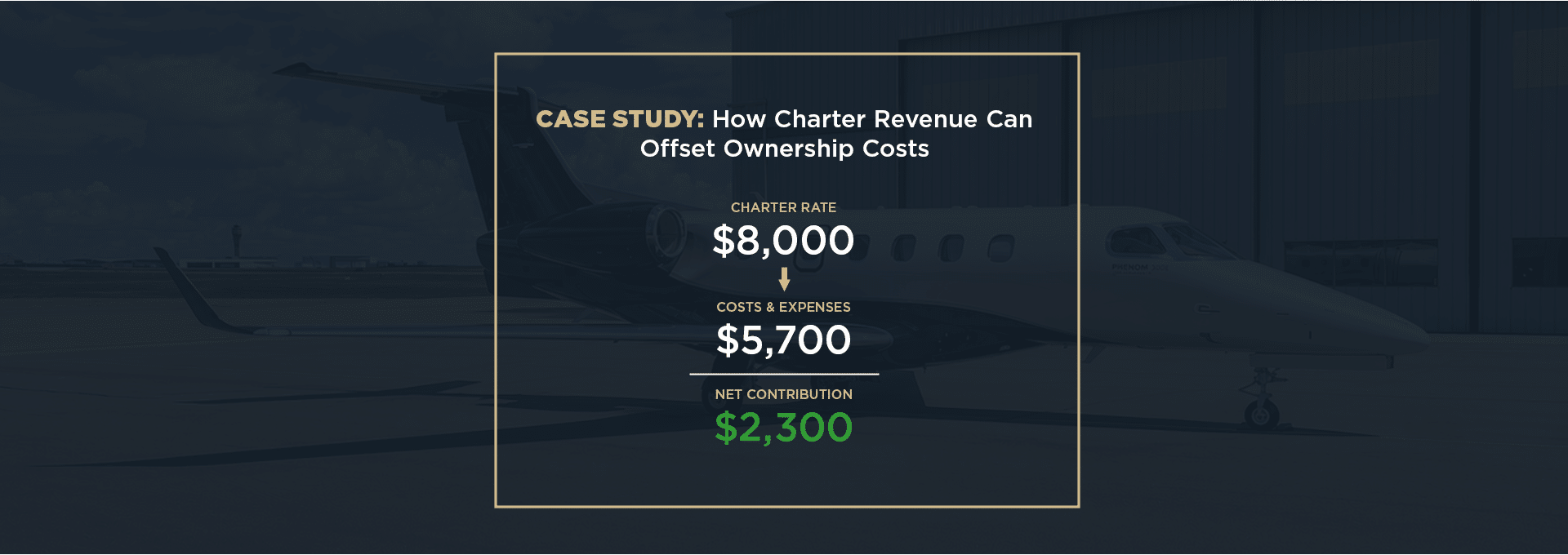
In this example, each charter hour generates approximately $2,300 that can contribute toward the aircraft’s fixed ownership costs.
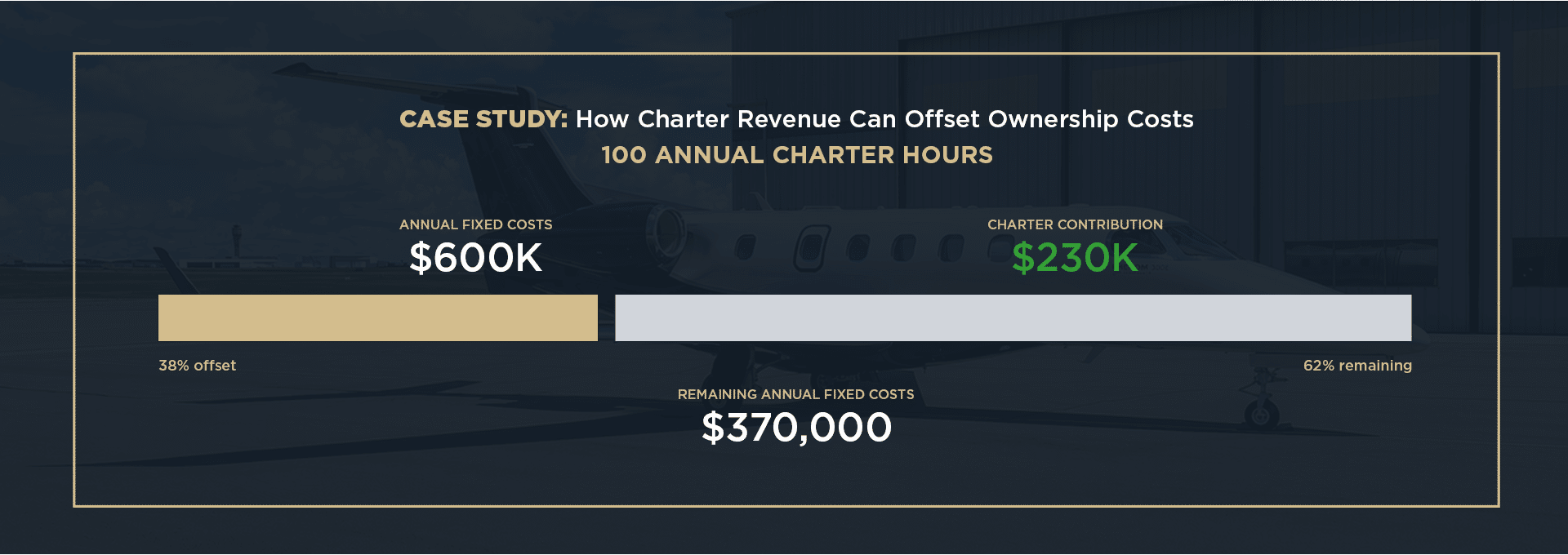
In this hypothetical scenario, charter activity offsets approximately 38% of the owner’s annual fixed ownership expenses.
The aircraft hasn’t necessarily become profitable as a standalone business. Instead, charter revenue has helped reduce the amount the owner must personally contribute toward expenses they were already responsible for.
Note: These figures are illustrative only and do not represent actual Flightpath charter rates, aircraft operating costs or guaranteed returns. Actual financial results depend on aircraft type, market demand, charter pricing, utilization, commissions, maintenance requirements and other operational considerations.
Charter Revenue Isn’t Just About Profitability
For many aircraft owners, the primary purpose of ownership is personal or business travel, not generating a profit.
The aircraft provides convenience, flexibility, privacy and the ability to travel according to their own schedule.
Chartering the aircraft when it would otherwise be sitting idle can create an opportunity to recover a portion of the costs associated with maintaining that capability.
For example, charter revenue may help offset:
- Annual crew salaries and training
- Hangar and storage expenses
- Insurance premiums
- Aircraft management fees
- Ongoing subscriptions and operational services
The financial benefit isn’t necessarily determined by whether the charter rate exceeds the aircraft’s fully allocated hourly ownership cost.
It’s determined by the net financial contribution charter activity provides after accounting for the additional costs and obligations it creates.

Is Chartering the Right Decision for Every Aircraft Owner?
While charter revenue can help offset ownership costs, making an aircraft available for charter isn’t necessarily the right choice for every owner.
Several factors should be evaluated before making that decision.
Aircraft Availability
Owners must consider how charter activity will fit around their personal and business travel requirements.
An effective charter management arrangement should establish clear expectations around owner priority, aircraft availability and scheduling.
Additional Aircraft Utilization
More flight hours can mean additional maintenance, component wear, engine utilization and potentially accelerated inspection requirements.
These costs need to be incorporated into the financial evaluation.
Market Demand
Not every aircraft generates the same level of charter demand.
Aircraft type, location, passenger capacity, range, cabin configuration and local market conditions can influence charter opportunities. Flightpath’s managed aircraft fleet reflects experience across a range of aircraft types and ownership requirements.
Charter Pricing and Revenue
Charter rates fluctuate based on market conditions, aircraft availability, positioning requirements and customer demand.
A successful charter program should consider the contribution generated by each opportunity rather than focusing exclusively on maximizing flight hours.
Long-Term Aircraft Value
Additional utilization may influence an aircraft’s maintenance status, remaining component life and resale value.
Owners should consider both the immediate revenue opportunity and the potential long-term financial implications, including how utilization may affect future aircraft acquisition and resale decisions.
The Importance of an Experienced Aircraft Management Partner
Evaluating whether to charter an aircraft involves more than comparing hourly rates.
It requires understanding the relationship between operating costs, fixed ownership expenses, market demand, maintenance requirements and the owner’s individual travel needs.
At Flightpath, we believe effective aircraft management begins with helping owners understand these considerations.
Our approach is focused on providing owners with the information they need to evaluate charter opportunities, understand the financial implications and make decisions that align with their ownership objectives.
Because successful aircraft management isn’t simply about maximizing flight hours.
It’s about making informed decisions that balance financial performance, aircraft care and owner priorities.
Could Charter Revenue Help Reduce Your Aircraft Ownership Costs?
At Flightpath, we believe effective aircraft management begins with helping owners understand these considerations.

Frequently Asked Questions About Aircraft Charter Revenue
1. Can chartering my private aircraft help offset ownership costs?
Yes. Making your aircraft available for charter can generate revenue that helps offset fixed ownership expenses, including crew salaries, hangar fees, insurance and aircraft management fees.
The financial benefit depends on the revenue remaining after accounting for the additional operating costs, commissions and other expenses associated with charter activity.
2. Is chartering my aircraft profitable?
Chartering an aircraft doesn’t necessarily generate a profit when all ownership expenses are considered.
However, even when charter revenue is lower than the aircraft’s fully allocated hourly ownership cost, it may still provide a positive financial contribution toward fixed expenses.
The key is understanding the difference between total ownership costs and the incremental costs associated with each charter flight.
3. How many charter hours does it take to offset aircraft ownership costs?
There is no universal number. The amount of charter activity required depends on the aircraft type, operating expenses, charter rates, market demand and annual fixed ownership costs.
For example, if an aircraft generates a net contribution of $2,300 per charter hour, completing 100 charter hours annually could offset approximately $230,000 in fixed ownership expenses.
These figures are hypothetical and actual results will vary.
4. Can I still use my aircraft for personal travel if it’s available for charter?
Yes. Aircraft owners continue using their aircraft for personal and business travel while participating in a charter management program.
However, scheduling arrangements, owner priority and aircraft availability should be clearly established with the management company to ensure the program aligns with the owner’s travel requirements.
5. Does chartering my aircraft increase maintenance costs?
Yes, additional flight hours and utilization can increase maintenance requirements, engine usage, component wear and other operating expenses.
These costs should be considered when evaluating charter opportunities. An experienced aircraft management company can help owners understand how additional utilization may affect operating expenses, maintenance schedules and long-term aircraft value.