
Private jet destinations are no longer just about where you can go, they’re about how efficiently, strategically, and comfortably you can get there. In private aviation, the destination is only one part of the equation. What matters just as much is how the journey is structured around it: airport selection, routing efficiency, seasonal demand, and aircraft suitability all shape the experience.
Unlike commercial aviation, private jet travel destinations are defined by flexibility. You’re not limited to airline hubs or fixed schedules. Instead, you can access thousands of regional airports, reduce ground transfer times, and align travel with business priorities or personal timing.
By understanding these factors in context, you can approach executive air travel with more clarity, efficiency, and confidence, whether you’re flying for business, leisure, or a combination of both.
Quick Summary: Private jet travel across Canada, the U.S., and Caribbean and Pacific destinations requires strategic planning due to long distances, airport accessibility, and seasonal demand. From major business hubs to remote leisure destinations, efficiency depends on smart routing, aircraft selection, and timing. This ultimate guide breaks down key destinations and planning considerations to help you navigate private aviation with greater clarity, flexibility, and confidence.
How to Choose the Right Private Jet Destination
Choosing the right private jet destination starts with intent. Every trip has a purpose, and that purpose determines how the entire journey is structured, from aircraft selection to airport choice, and even departure timing.
Private aviation enables access to destinations that commercial airlines often cannot serve directly. However, the real value comes from understanding how logistics, demand, and aircraft capability intersect.
Purpose-Driven Travel: Business, Leisure, or Mixed Use
Your travel purpose is the foundation of destination planning. Business travelers prioritize proximity to financial districts, predictable scheduling, and minimal downtime between meetings. Leisure travelers focus more on seasonal access, resort adjacency, and travel comfort.
Mixed-purpose itineraries are increasingly common. A traveler might attend a morning meeting in New York, then fly the same day to the Bahamas. Private jet charters make this possible, but coordination becomes essential to ensure aircraft availability and efficient routing.
Distance, Range, and Real-World Routing
Distance in private aviation is not simply measured in miles, it’s measured in efficiency outcomes. Private jet travel destinations are selected based on how quickly and directly they can be reached without commercial constraints.
Short regional flights often eliminate the need for airport congestion entirely. Longer routes require careful aircraft matching to ensure non-stop capability whenever possible.
For example:
- Toronto → New York: 1-hour light jet flight with flexible departure windows
- Calgary → Vancouver: efficient regional repositioning with minimal ground delay
- Montreal → Paris: long-range aircraft with optimized transatlantic routing
- Miami → Aspen: midsize jet with mountain airport considerations
Routing decisions also consider jet stream patterns, air traffic corridors, and restricted airspace zones, all of which can significantly affect timing.
Airport Strategy and FBO Access
Airport selection is one of the most underestimated factors in executive air travel. While commercial aviation is restricted to major hubs, private jets can operate from thousands of regional airports that dramatically reduces total travel time.
Fixed Base Operators (FBOs) enhance this advantage by offering dedicated terminals, expedited customs clearance, private lounges, and streamlined boarding processes.
Examples of strategic airport selection include:
- Teterboro instead of JFK for Manhattan access
- Van Nuys instead of LAX for Los Angeles business travel
- Billy Bishop instead of Toronto Pearson for downtown connectivity
- Fort Lauderdale Executive instead of Miami International for faster boarding
These choices can reduce ground transfer times by 30–90 minutes per leg, which compounds significantly across multi-stop itineraries.
Seasonality and Demand Shifts
Seasonality is a critical factor in private jet destinations because it directly influences availability, pricing, and airport congestion. Unlike commercial travel, where schedules are fixed, private aviation demand fluctuates dynamically.
Winter months drive demand toward warmer climates such as Florida, the Caribbean, and Southern California. Summer shifts traffic toward Europe, coastal Canada, and northern recreational regions. Event-based spikes further compress availability.
Examples include:
- Davos (January): global business aviation surge
- Miami Art Basel (December): short-term luxury demand spike
- Aspen ski season (December–March): heavy inbound private traffic
- European summer coastal routes (June–August): peak repositioning demand
Planning during these windows ensures better aircraft access and avoids last-minute repositioning costs.
Aircraft Matching for Destination Efficiency
Aircraft selection is a defining factor in destination feasibility. Choosing the wrong aircraft can introduce unnecessary fuel stops, airport restrictions, or operational delays.
Light jets are ideal for trips under three hours, while midsize jets balance efficiency and comfort for coast-to-coast travel. Heavy jets support long-haul international missions, and ultra-long-range aircraft eliminate most technical stops.
Key operational factors include:
- Runway length limitations at destination airports
- High-altitude airport performance requirements
- Passenger and baggage weight distribution
- Weather-related performance adjustments
- Fuel stop minimization strategy
Matching aircraft correctly ensures not only efficiency but also reliability across varying conditions.
Time Efficiency and Opportunity Cost in Destination Planning
Private jet travel is fundamentally about time optimization. Every destination decision carries an opportunity cost that impacts productivity, business output, or personal time allocation.
For business travelers, inefficient routing can mean lost meeting time or delayed deals. For leisure travelers, it can reduce the time spent at the actual destination.
A well-planned itinerary can reclaim hours per trip by eliminating:
- Commercial layovers
- Security delays
- Ground transportation bottlenecks
- Airport congestion queues
Over multiple trips, these efficiencies compound significantly, turning destination strategy into a productivity tool rather than a logistical consideration.

Popular Canadian Private Jet Destinations
Canada’s private aviation landscape is shaped by geography, distance, and seasonal variability, which is why planning around Canadian private jet destinations requires a strategic approach. Major hubs like Toronto, Vancouver, Calgary, and Montreal act as primary connection points for business travel.
Because of large distances between cities, private jet services are often the only efficient option for same-day multi-city meetings. For example, Toronto to Calgary is a full-day commercial journey but a straightforward private jet route.
Leisure destinations such as Muskoka, Whistler, and the Laurentians experience high seasonal demand, especially during summer and winter holiday periods.
Winter weather also plays a major operational role, often requiring de-icing procedures and flexible scheduling to accommodate rapidly changing conditions.

Popular U.S. Private Jet Destinations
The United States is the most active private aviation market globally, with a dense network of airports and high-frequency business routes.
Key cities such as New York, Los Angeles, Chicago, Dallas, and Miami anchor most executive air travel demand. However, the real advantage lies in secondary airport usage, which significantly improves efficiency.
For example:
- Westchester County instead of JFK for New York
- Van Nuys instead of LAX for Los Angeles
- Dallas Love Field instead of DFW for faster departures
Event-driven travel is also significant. US private jet destinations are in high-demand for events like Super Bowl weekend, major tech conferences, and financial summits create temporary aviation bottlenecks.
Leisure destinations such as Aspen, Naples, Scottsdale, and Palm Beach also see consistent seasonal private jet traffic, especially during winter months.
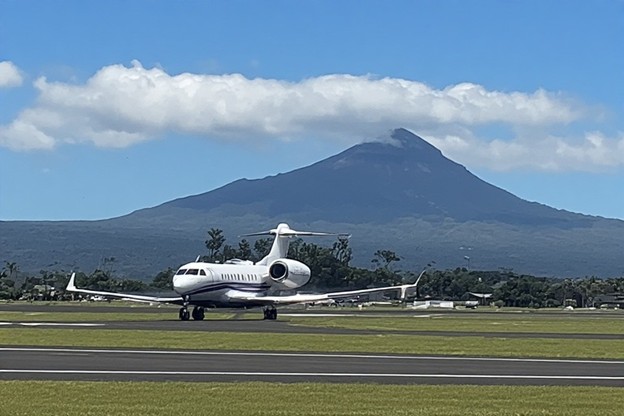
Popular Caribbean & Pacific Private Jet Destinations
The Caribbean and Pacific regions are defined by seasonal leisure demand and long-range routing requirements.
Popular Caribbean and Pacific private jet destinations include the Bahamas, Turks and Caicos, St. Barts, Antigua, and Barbados. These locations are frequently accessed from U.S. East Coast hubs during the winter months.
In the Pacific, and also a U.S. State, Hawaii remains a primary long-range destination requiring aircraft capable of extended overwater flight operations.
Operational considerations include:
- Short runway limitations on smaller islands
- Weather volatility during storm seasons
- Fuel planning for remote airports
- Inter-island repositioning requirements
Despite logistical complexity, private aviation provides unmatched access to remote resort destinations that commercial travel cannot efficiently support.
Regional Planning Framework: How Destinations Are Selected
Private jet travel isn’t just about choosing where to go, it’s about designing a trip that works around your schedule, priorities, and destination in the most efficient way possible. Every route is planned with intention, balancing convenience, time savings, and operational realities.
Key planning factors include:
1. Mission Priority
Every trip starts with understanding the purpose behind it, whether it’s business, leisure, or a mix of both. This helps determine how quickly you need to get there, which airports make the most sense, and how flexible the schedule can be. It also helps shape the entire journey so it aligns with what matters most to you on that specific trip, whether that’s arriving on time for a meeting or maximizing time at your destination.
2. Airport Accessibility
The goal is always to get you as close as possible to your final destination. That often means choosing smaller or regional airports that reduce ground travel time and avoid congestion. Factors like customs processing, ground handling, and traffic flow are all considered to keep your arrival and departure as smooth and efficient as possible.
3. Aircraft Capability
Not every aircraft is suited to every route, so the right aircraft has to match the mission. Range, runway requirements, passenger needs, and performance conditions all play a role in determining what can safely and efficiently operate the trip. This ensures your journey is not only possible, but comfortable and optimized from start to finish.
4. Seasonal Conditions
Weather and seasonal demand can have a big impact on how a trip is planned. Storms, peak travel periods, and airport congestion are all taken into account to avoid delays and improve reliability. In busy seasons, alternative airports or adjusted schedules may be used to keep everything running smoothly.
5. Routing Efficiency
The flight path itself is carefully optimized to save time wherever possible. Air traffic, weather systems, restricted airspace, and fuel considerations are all factored into the routing. Even small adjustments can make a noticeable difference in overall travel time, especially on longer flights.
This structured approach ensures your destination isn’t just a point on a map, it’s part of a carefully planned journey designed around efficiency, comfort, and real-world performance.

Fly with Confidence, Fly with Flightpath
Private aviation is most effective when destination planning is intentional and structured. Every decision, from aircraft selection to airport choice, affects the efficiency and reliability of the journey.
Flightpath helps travelers and organizations navigate private jet travel destinations with clarity, ensuring that each trip is aligned with operational efficiency and personal priorities.
Rather than reacting to availability, you gain the ability to plan proactively, reducing friction and improving consistency across all travel patterns.
If you are ready to refine your executive air travel strategy, the first step is understanding your most common routes and identifying where efficiency gains can be made. From there, destination planning becomes a tool for optimization rather than uncertainty.
Frequently Asked Questions About Private Jet Travel Destinations
What are the most common private jet travel destinations?
Major hubs include Toronto, New York, Miami, Los Angeles, London, and seasonal destinations such as Aspen and Caribbean islands. These locations consistently rank high due to strong business activity, luxury tourism demand, and well-developed private aviation infrastructure.
How do private jet destinations differ from commercial routes?
Private jets use smaller regional airports closer to final destinations, eliminating layovers and reducing total travel time. This allows passengers to bypass major congestion points that typically slow down commercial travel.
Can private jets fly to remote or island destinations?
Yes, but aircraft range, runway length, and fuel logistics must support the operation. In many cases, careful planning is required to determine whether a direct flight is possible or if a technical stop is needed.
What determines airport selection for private jets?
Proximity, runway capacity, customs availability, and FBO services all influence airport choice. In many cases, the closest airport is not always the best option when operational efficiency is considered.
How does seasonality affect private jet travel destinations?
Seasonality impacts demand, pricing, aircraft availability, and airport congestion. It can also influence which aircraft types are positioned in certain regions at different times of the year.
How far in advance should private jet travel be planned?
While flexible, peak seasons benefit from advance planning to secure preferred aircraft and timing. Booking early also increases the likelihood of accessing the most efficient routing options.
Are private jet destinations limited by aircraft type?
Yes, range, runway requirements, and performance capabilities define operational access. Aircraft limitations can also affect whether nonstop travel is possible or if routing adjustments are required.
Why is routing important in private aviation?
Efficient routing reduces flight time, improves scheduling accuracy, and increases overall travel efficiency. It also helps minimize exposure to delays caused by congestion or weather-related airspace restrictions.
From Destination Selection to Fully Optimized Travel Efficiency
Private jet travel is not just about geographic points, it is about strategic decisions that shape the entire travel experience. When you factor in airport access, aircraft capability, routing efficiency, and seasonal demand, destination planning becomes a core driver of time savings and operational performance.
Whether you are flying across North America for business or heading to seasonal leisure destinations in the Caribbean, the true value of private aviation lies in its ability to adapt to your schedule and priorities.
By understanding how destinations are selected and optimized, you gain more control over your travel experience, ensuring every trip is efficient, predictable, and aligned with your goals.
Flightpath helps transform destination planning into a structured advantage, allowing you to travel with greater clarity, consistency, and confidence.
If you’re planning travel and want a route tailored to your schedule, aircraft needs, and destination priorities, contact our team or request a quote to start building a more efficient private jet itinerary.